How do you integrate art into a large public building project - and how can art be actively used to support the project's vision and the experience of the place? In the Glass Blocks at Haukeland University Hospital, art was developed in close collaboration between artists, client, users and architects. In this interview, visual artist and curator Jørgen Blitzner shares his experiences from working on the art project - from the first decisions and collaborations to the concrete works that have now become part of everyday life at the hospital.

1. Can you briefly introduce yourself and your role in the Glass Blocks art project?
My name is Jørgen Blitzner, I am a visual artist and curator, graduated from Bergen National Academy of the Arts in 1985 (now UiB, Department of Art). Later I have been a guest lecturer and external examiner at the same institution. I have experience from a number of self-initiated site-specific projects in public spaces.
I have collaborated with architects and urban planners in multidisciplinary groups to develop urban spaces and have led several art projects in public buildings.
I was head of the art committee for Glass Blocks at Haukeland University Hospital in Bergen from 2011-2024.
2. What was the overall ambition for the role of art in the Glass Blocks?
The art had to reflect the values that underpinned the plans for the hospital building. It had to enter into dialogue with the architecture, its expression and objectives.
The plans for the new hospital emphasised the special needs and rights of children. Art should meet children and young people in their world of experience, their understanding of the world and their level of reflection. At the same time, the art had to take into account the users' life situation and be able to provide both immediate sensory experiences and create recognition and reflection.
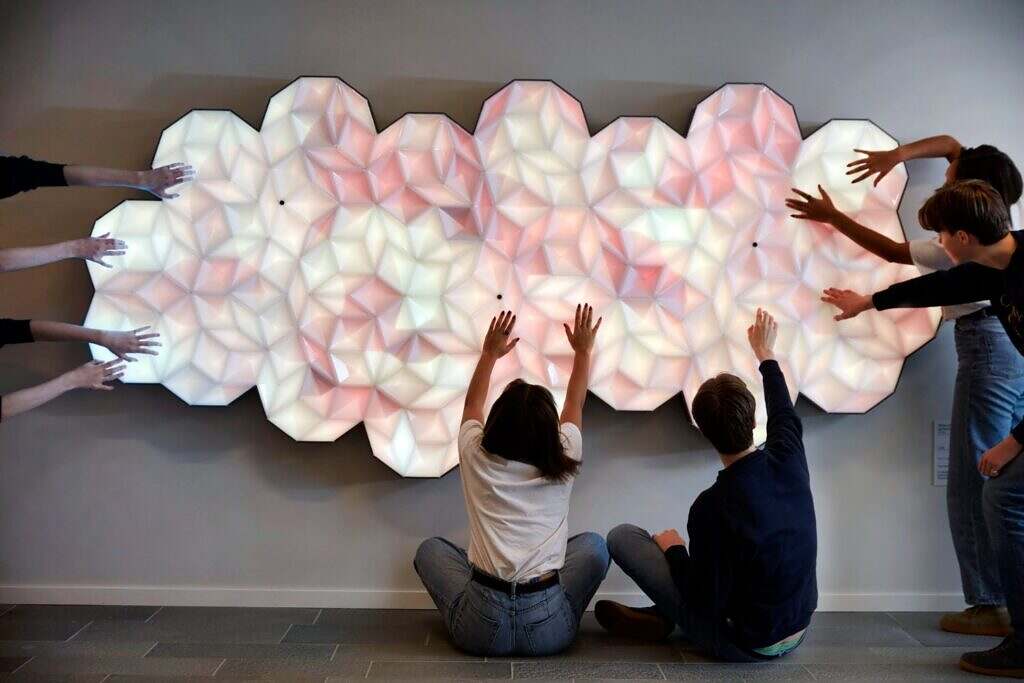
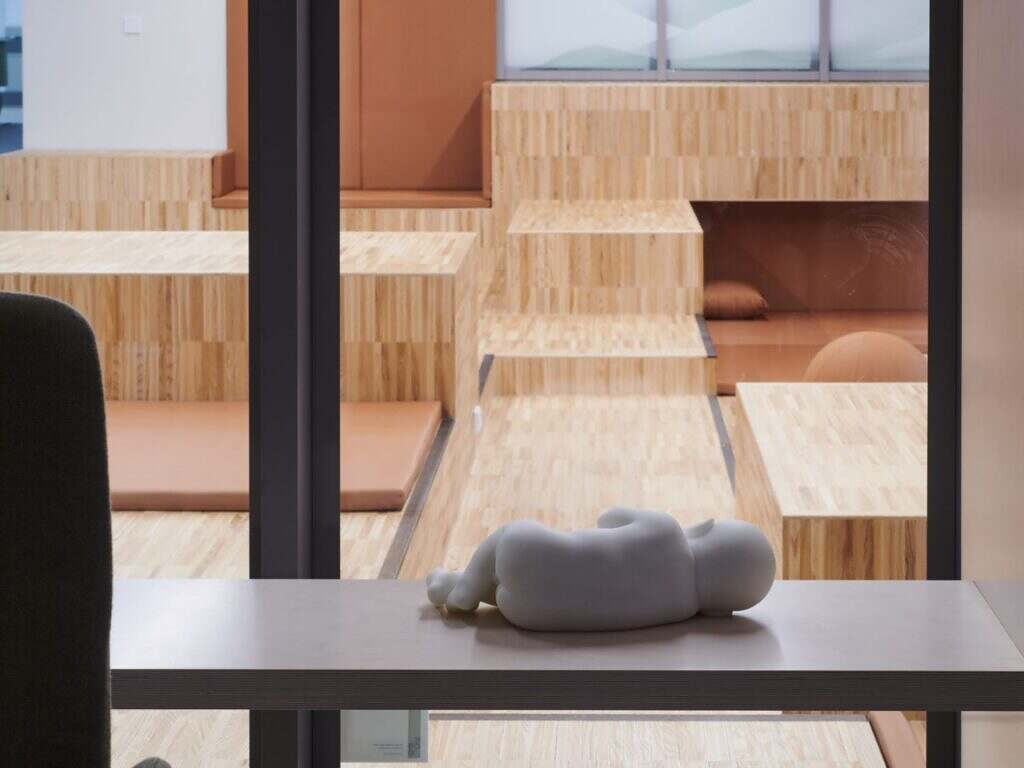
The art committee wanted the encounter with art to give children confidence in their own experiences and reflections, broaden their perception of reality and stimulate their own creativity.
The vision was concretised in four principles:
- Art must meet users' experiences, understanding of the world and level of reflection
- Art should emphasise varied sensory experiences
- Art must maintain a high international level
- Art must enter into dialogue with architecture, its expression and objectives
3. What does it take for a public client to work strategically with art in a construction project?
The importance and location of art should be clearly defined in an art plan, prepared by an art committee where the client is both represented and actively participates.
A successful art programme relies on collaboration between all parties throughout the project. In Glasblokkene, the art committee consisted of eight members: client, architects, users and two artists/art consultants.
A shared understanding of what you want to create - and how to do it - provides a strong foundation for a good result. At the same time, it's important to have a clear budget to work within.
4. How did you approach the project and how were artists and works selected?
The Art Committee began its work in autumn 2011, when the Glass Blocks were still just a big hole in the ground. We met about once a month.
One of the first things we did was to define the roles in the art committee. Many in the group were used to making decisions and leading processes, so we needed to get to know each other and establish a clear framework for the work.
We spent the first year developing the art plan. We went on study trips to Rikshospitalet and A-Hus in Oslo, St. Olavs Hospital in Trondheim and Great Ormond Street Hospital in London, among others. Olavs Hospital in Trondheim and Great Ormond Street Hospital in London to see how others had worked with art in hospital buildings.
Quite early on, we decided that we would rather have few but clear projects than many small ones.
The artists were selected either through direct commissions or competitions. For direct commissions, the art consultants proposed a number of artists for the art committee to evaluate. For the larger projects, we organised competitions where artists from all over the world could apply. Selected proposals were exhibited anonymously so that both users and the art committee could see them before a decision was made.
5. How did the collaboration with the artists, architects and client work?
It worked brilliantly. I experienced great mutual trust and commitment among everyone involved in the art committee.
During the pandemic, we faced major challenges around logistics and progress, and the artists, architects and client were very involved and available to solve problems along the way.
6. How have you worked to make art relevant to children and young people as users?
We had many good discussions about this particular theme. Older children and young people often relate to art more like adults, while younger children are more likely to experience art through emotions and senses rather than an intellectual approach.
Among other things, we had meetings with the Youth Council - a group of young people who were or had been patients at the hospital. They provided clear and valuable input, which we incorporated into the planning.
The art committee emphasised that art should create varied sensory experiences and invite participation. Children are often stimulated more through participation than through pure observation, so we sought artistic expressions that could invite interaction and play.
At the same time, it was important that the art maintained a high artistic level and entered into dialogue with the architecture, materials and scale of the site.
7. Can you point to a work in the Glass Blocks where the match between art and place is particularly successful?
It's a difficult choice because several works interact very strongly with the site.
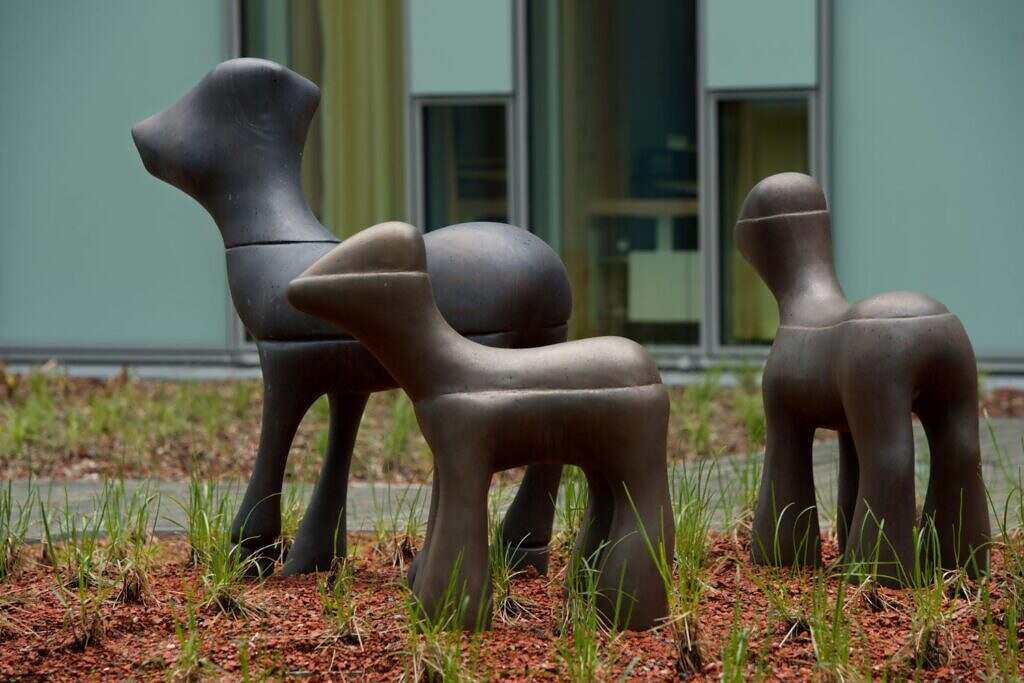
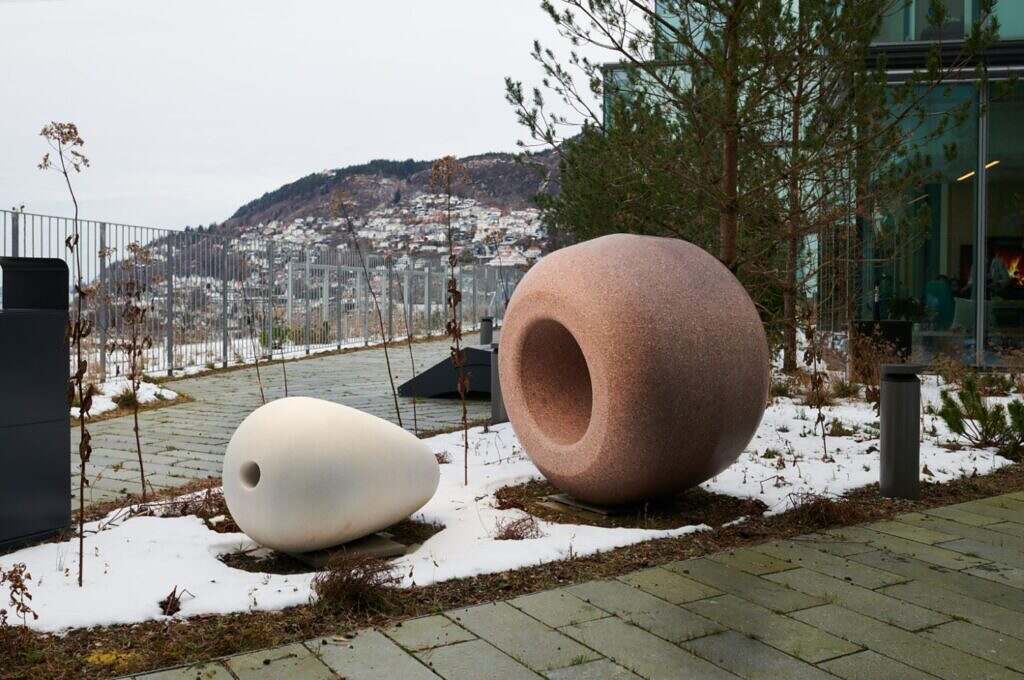
Edith Lundebrekke's sculptures “Fibonacci”, “Sinus” and “Korpus” on the forecourt invite interaction and play.
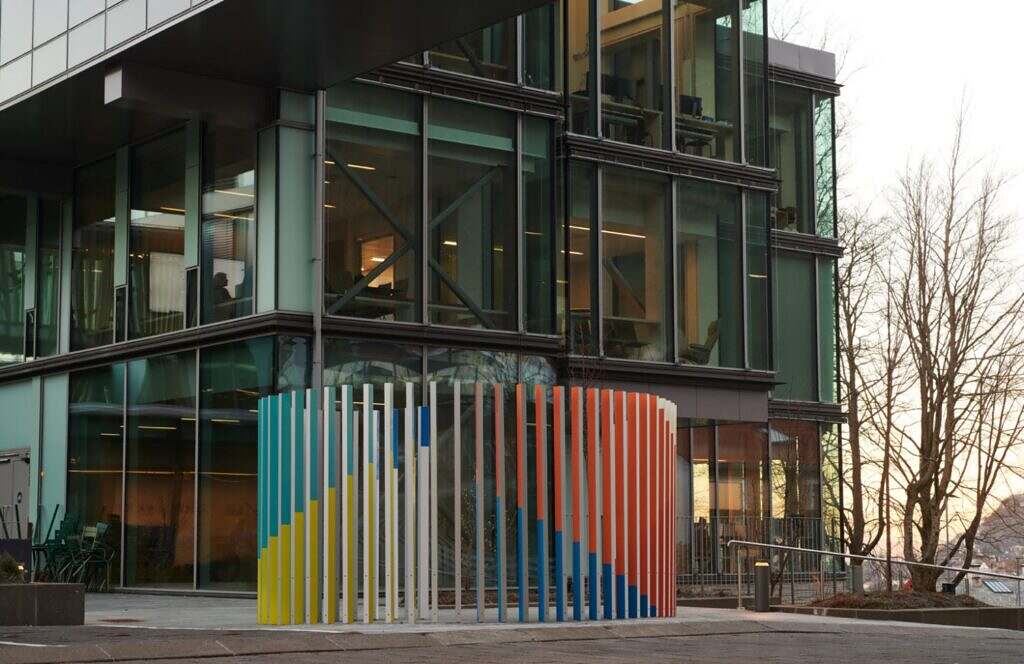
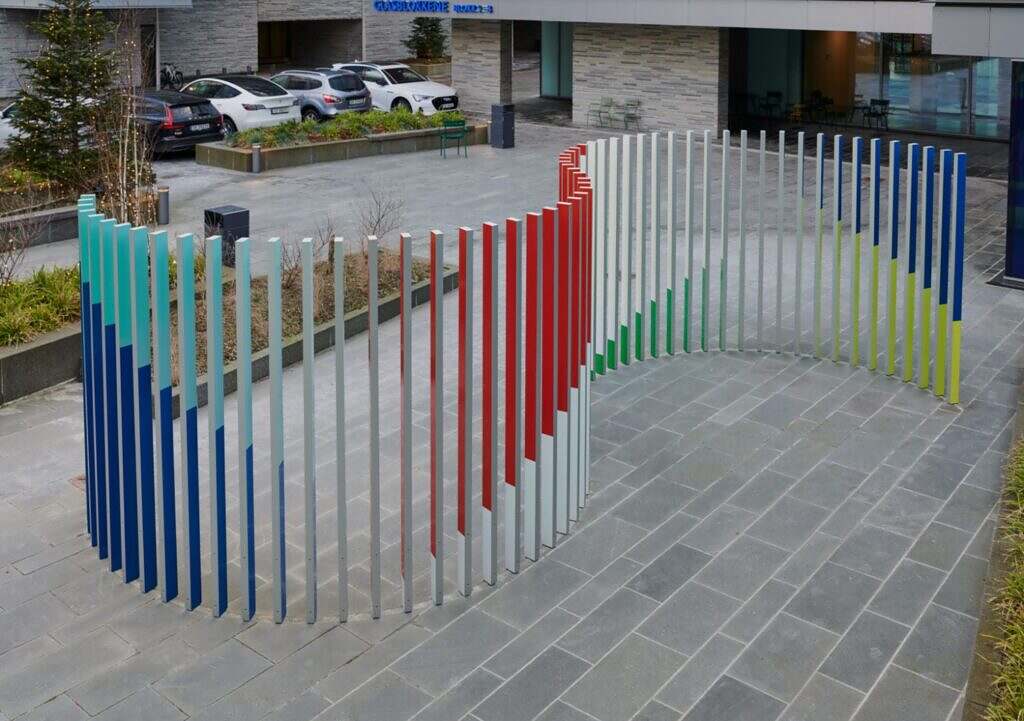
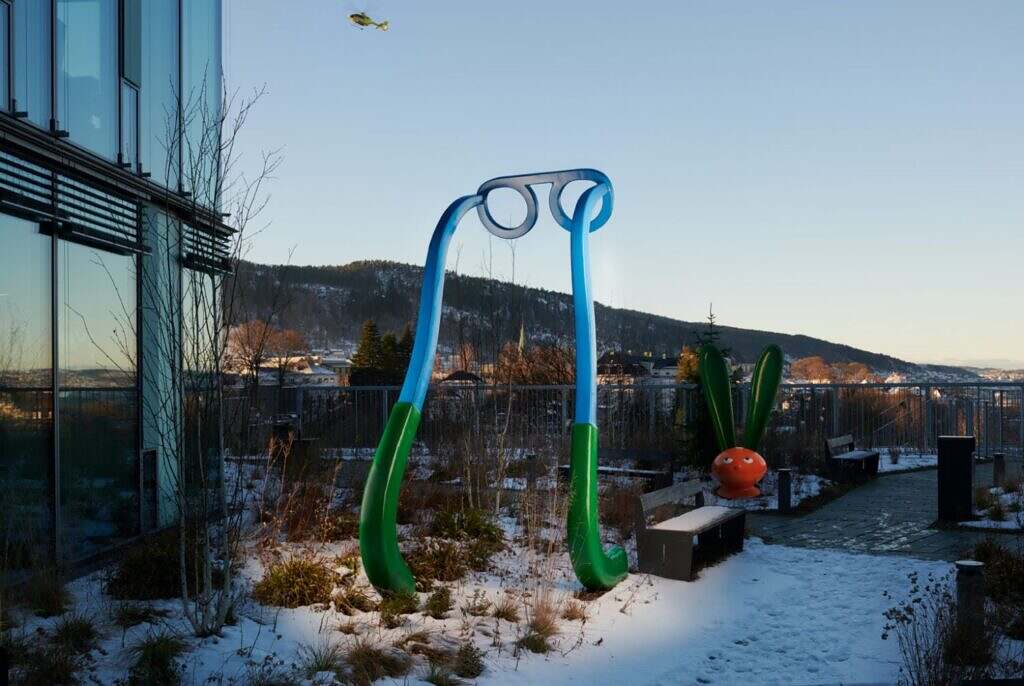
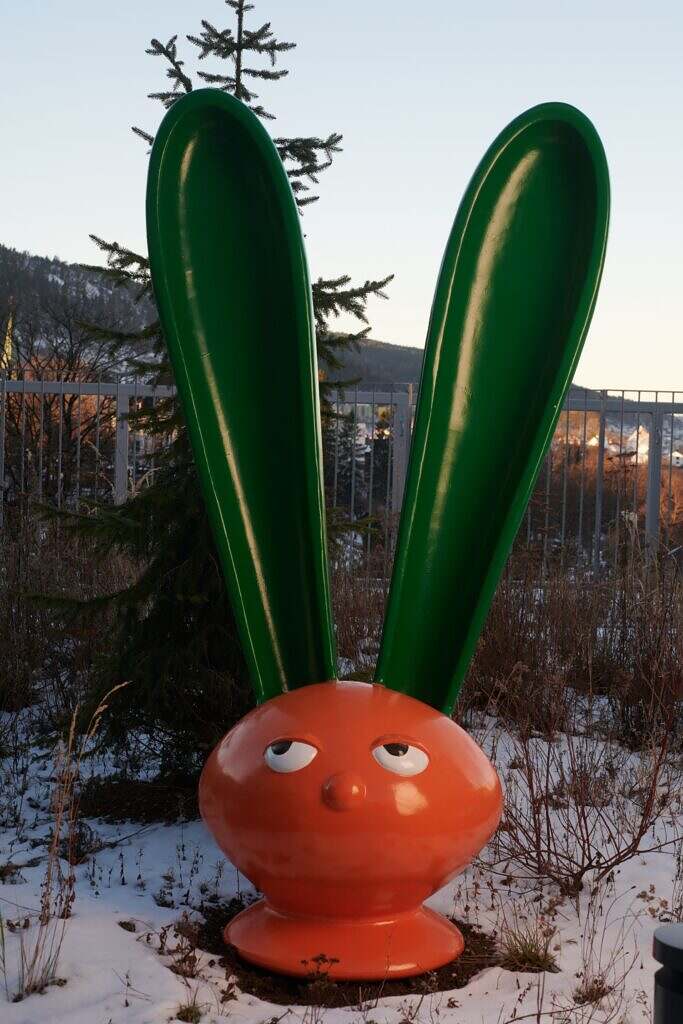
German artist group Inges Idee has created the work “Nice to see you”, which with its cartoon-like expression is both humorous and inviting for young users.
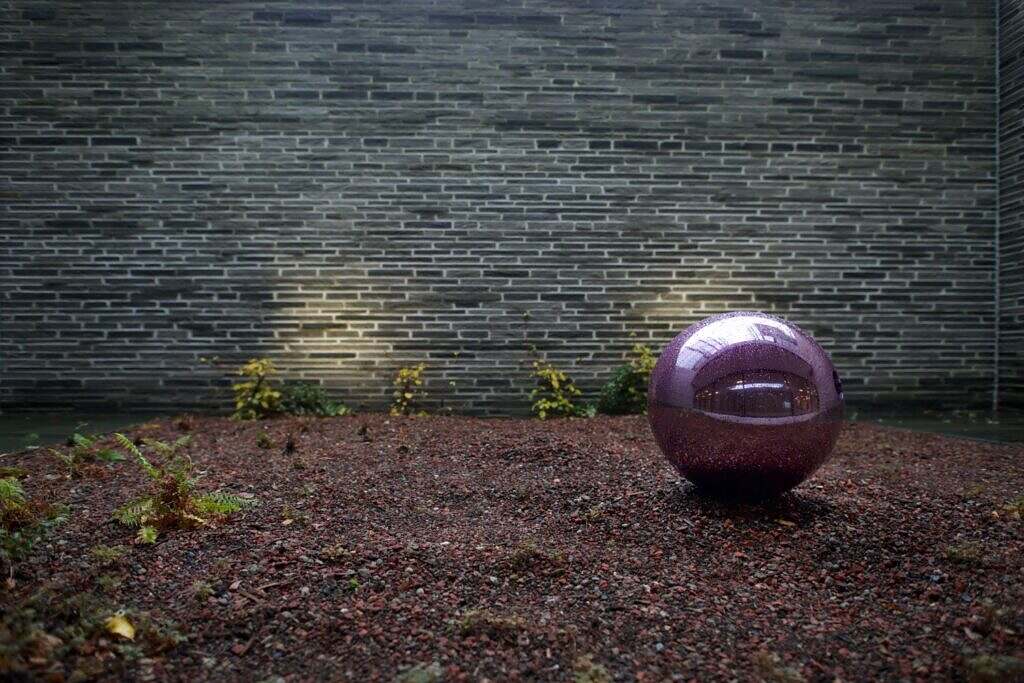
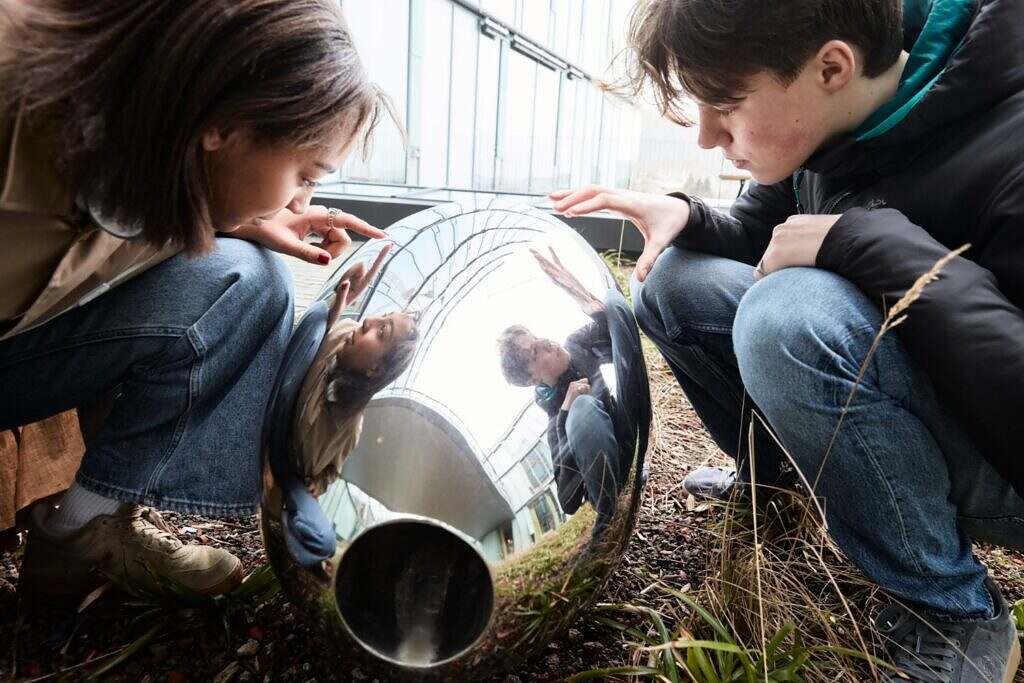
I would also highlight the 11 Pearls by Mari Røysamb and Ole Rosén, which are distributed in the six gardens between the buildings. The sculptures are designed to be actively used, and I've seen children crawling through them or reflecting in the surfaces several times.
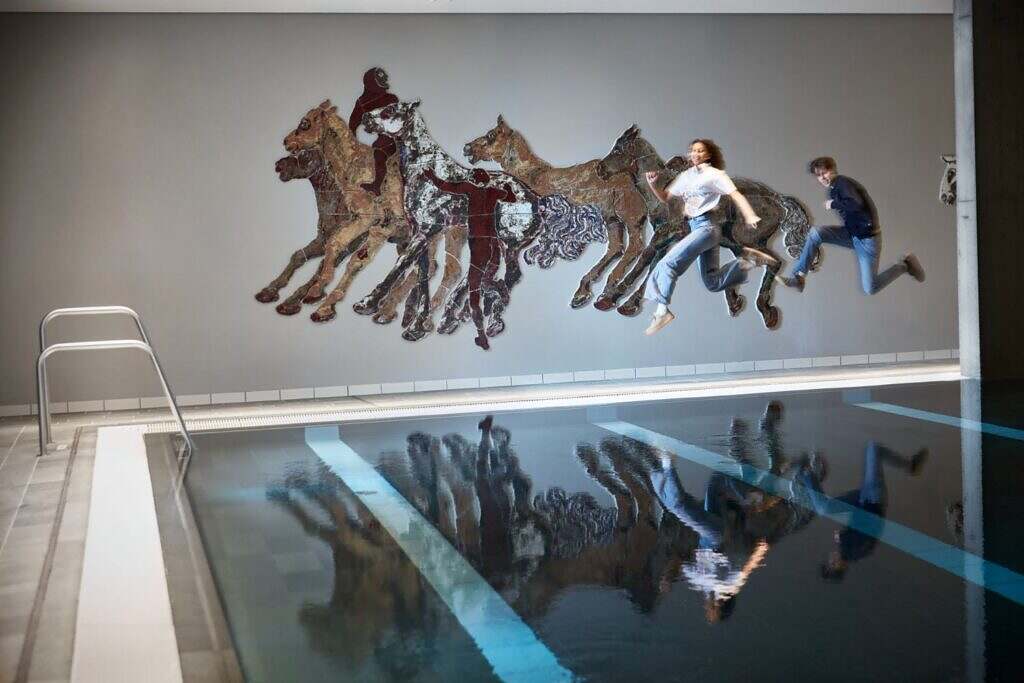
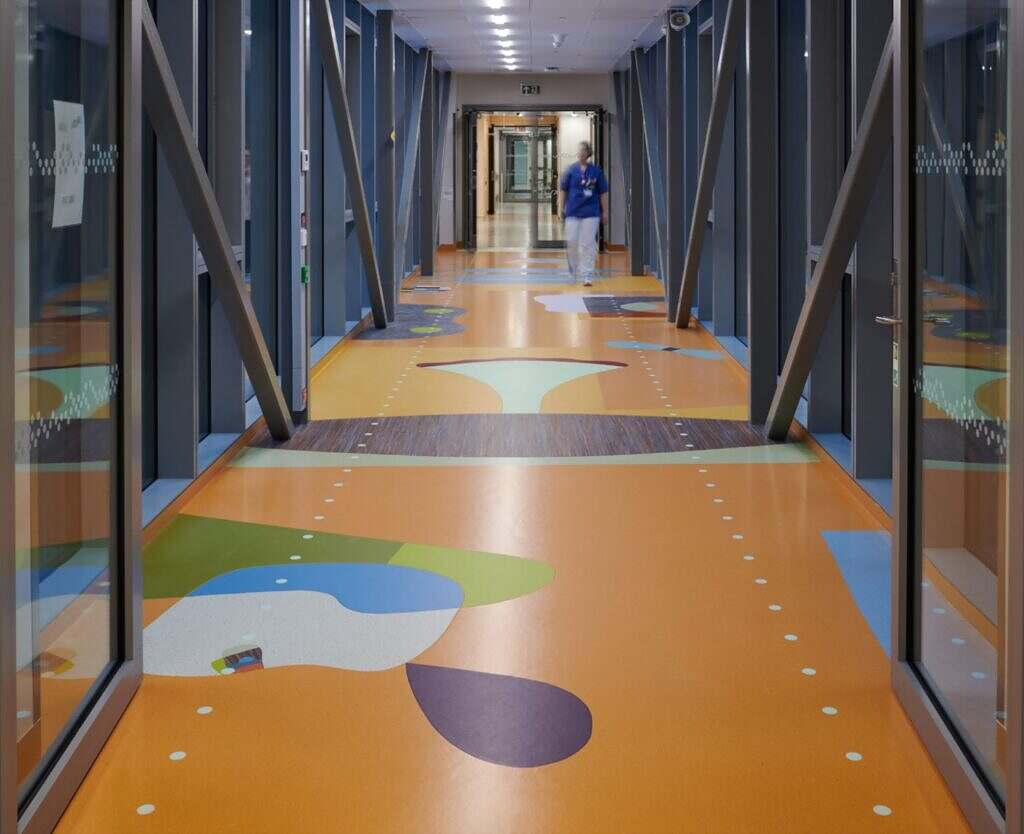
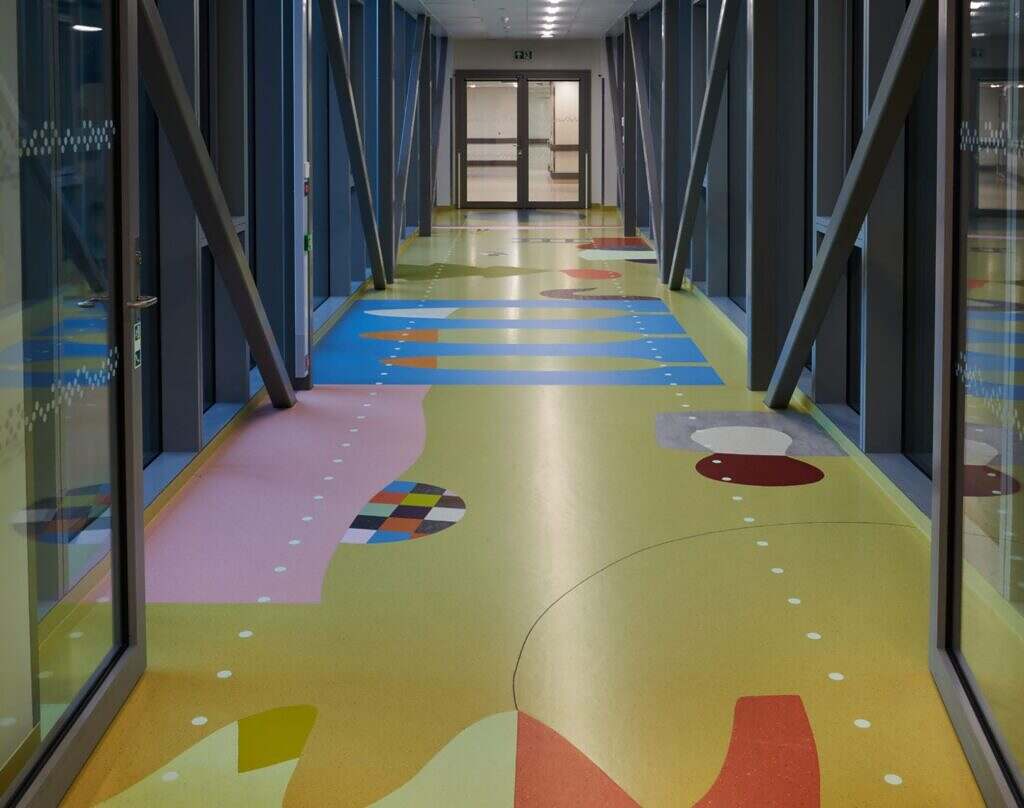
But if I have to emphasise one work, it has to be Ida C. Helland-Hansen's floor works “Once upon a time...” and “The Shower Bridges”. Here, images and shapes are embedded in the floors as intarsia. The motifs are based on fairy tales and invite play, interpretation and interaction.
Both children and staff love these floors. They act as identity markers and as small discoveries in the large buildings.
8. What were the biggest challenges in the project - and how did you overcome them?
From the very beginning, we established fixed routines for information and communication between contractors, architects, artists and construction management.
The site was tight, so good logistics were essential. Foundations for sculptures had to be poured at precise times, glass works had to be delivered in line with the facade work, and we needed access to construction cranes at certain stages of the build.
In the middle of the process came the pandemic, which created great uncertainty about transport, costs and progress. It was crucial that everyone involved had insight into each other's work and communicated closely on an ongoing basis.
It was also a great help that the art project was registered in the digital 3D model of the construction project with the help of the architects and construction manager.
9. What do you see as the most important value art can add to public buildings like hospitals and schools?
Art has inestimable value in public spaces.
We must remember that patients are not just sick - they are first and foremost people with the same needs as everyone else.
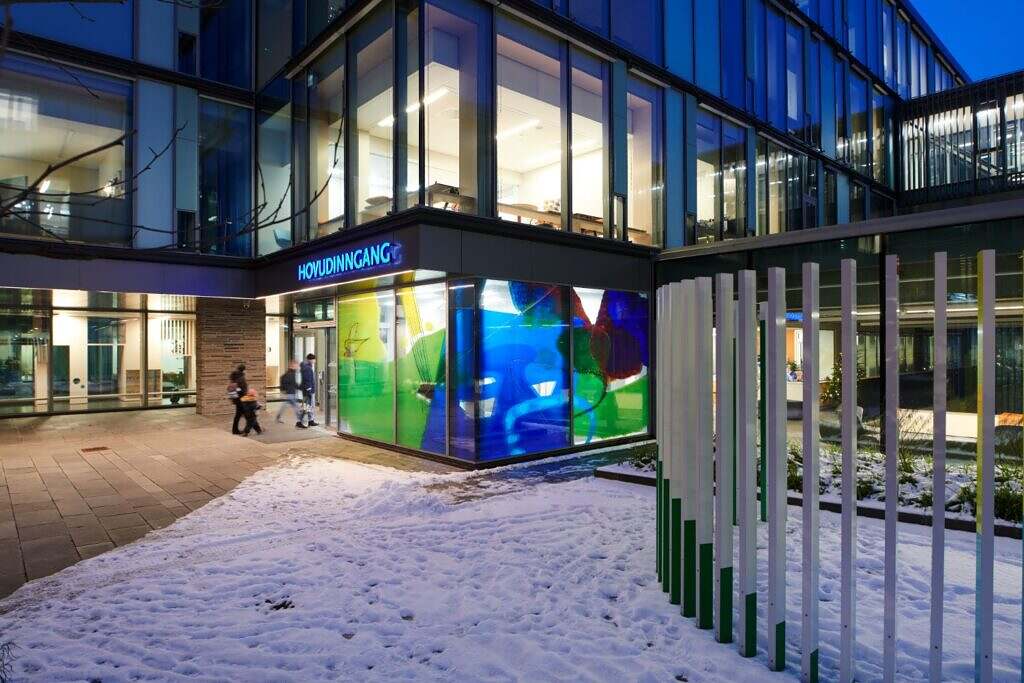
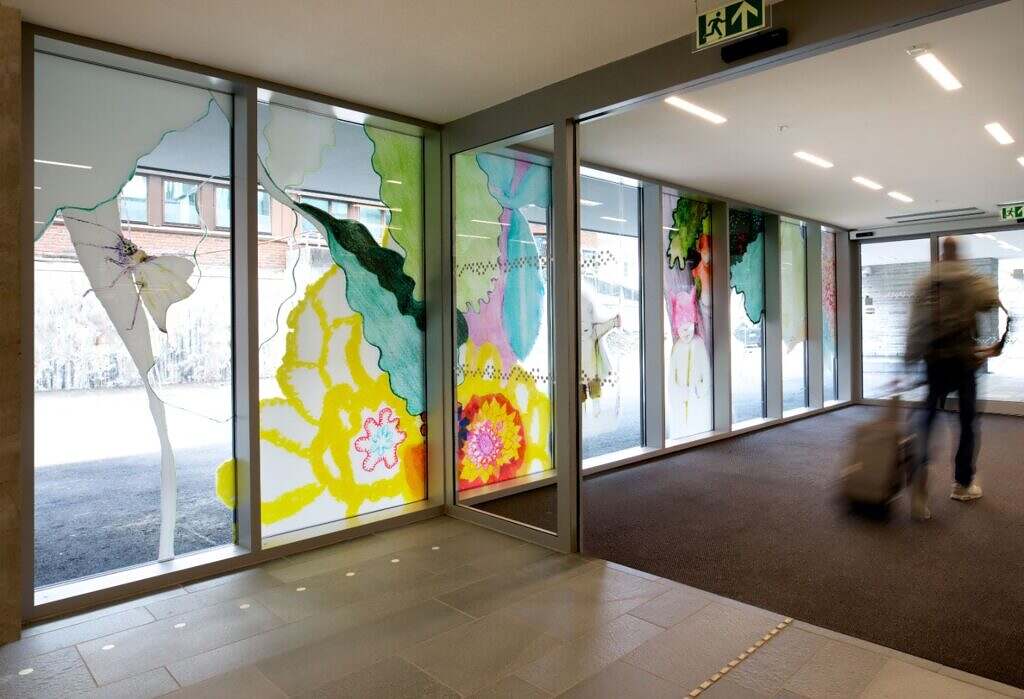
Art in public spaces acts as a marker of identity. It says something about who we are, where we are and where we are going. This is true in all public spaces.
10. What's your best advice for public clients who want to work more actively with art but don't know where to start?
Establish a committee with a clear mandate and budget.
It's important that the committee communicates with those who will use the art. In Norway, few people visit art exhibitions on a regular basis, so contemporary art can seem foreign to many.
That's why it's crucial to talk and listen. In a way, art plays on the sidelines in the public space - the public space belongs to everyone.
While working on the Glass Blocks, I held countless presentations and meetings with different user groups, presenting the art committee's thoughts and processes. We received a lot of valuable feedback.
Even when some people were sceptical about art or certain artistic expressions, they felt that their voice was heard. This made the art easier to accept - even when you didn't necessarily agree with it.
Time is an important player. Listen and communicate.
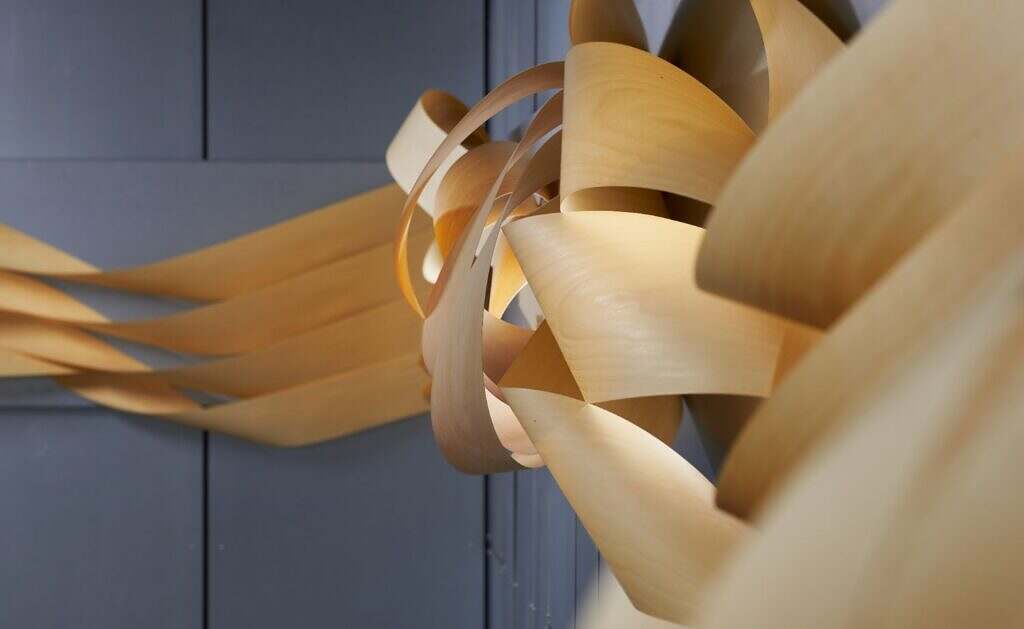
At KHR, we work with holistic solutions where architecture, art and wayfinding support function, orientation and user experience. If you want to learn more about the experiences from Glasblokkene or similar projects, you are welcome to contact architect Caroline Tjernås.
Thanks to KORO for the loan of images. Photographer Pål Hoff.


