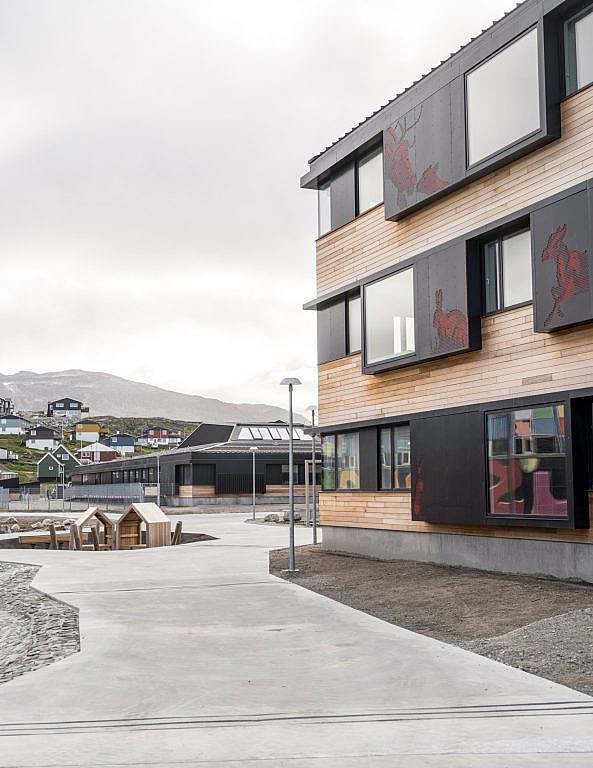
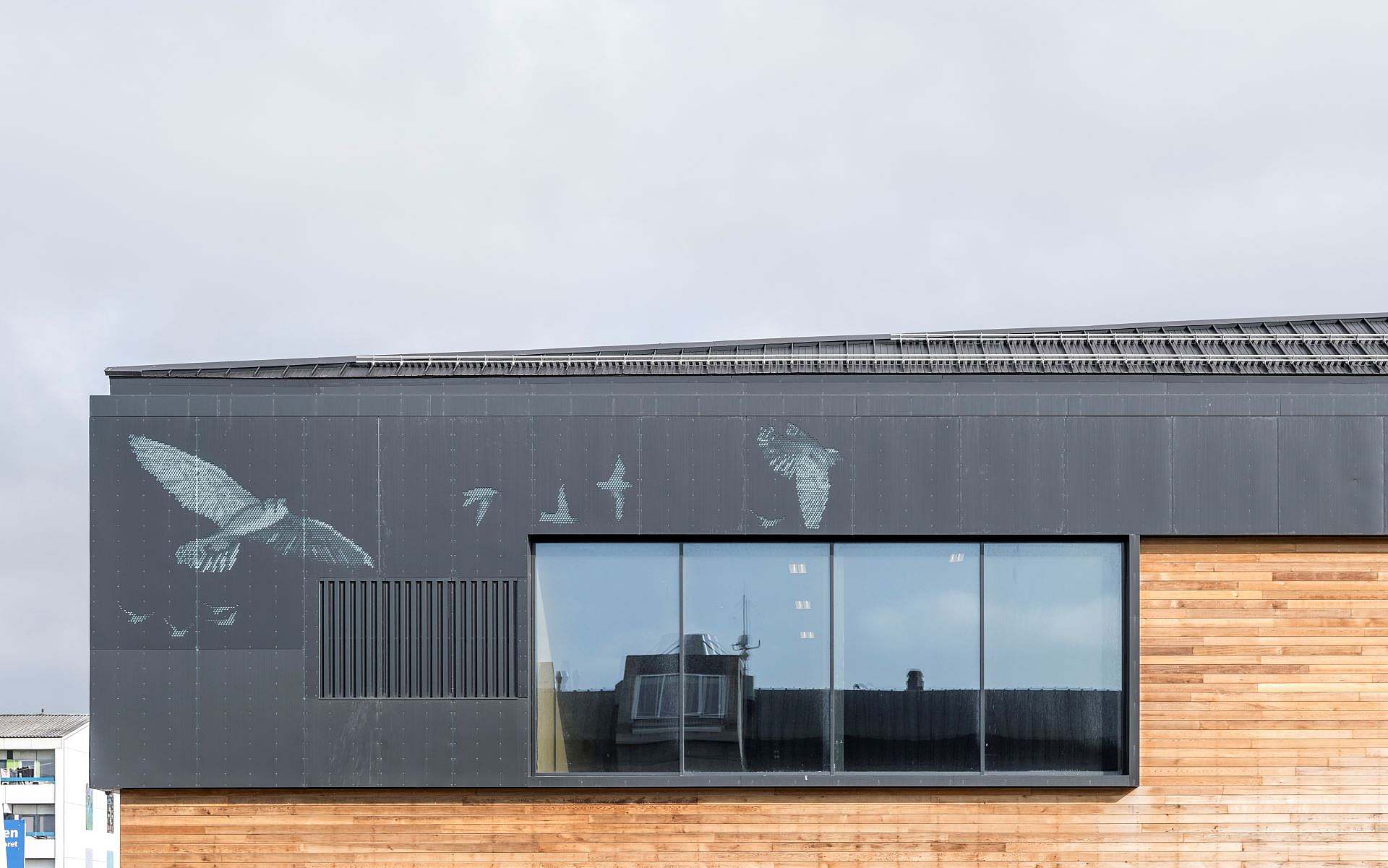
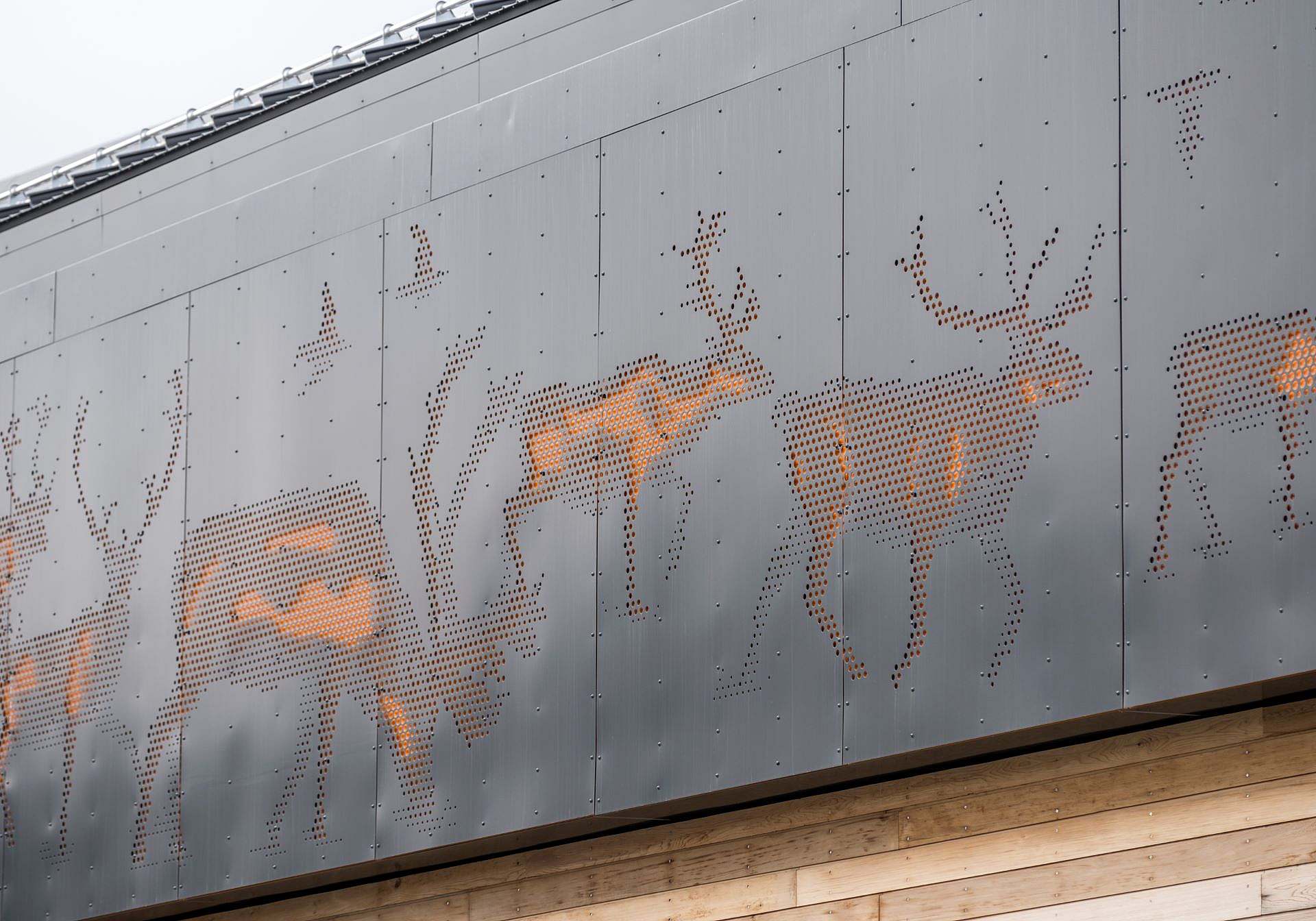
The facade of Nuuk School is the result of an explorative process, conceptually, creatively and technically, where we have combined the interaction with the Greenlandic landscape, Greenlandic traditions of colourful construction and a narrative about local fauna and flora. The result is a facade that gives identity and learning input to the school and the individual classes, while bringing the cityscape to life.
Nuuk
Greenland
Kommuneqarfik Sermersooq
2024
A facade that blends in naturally
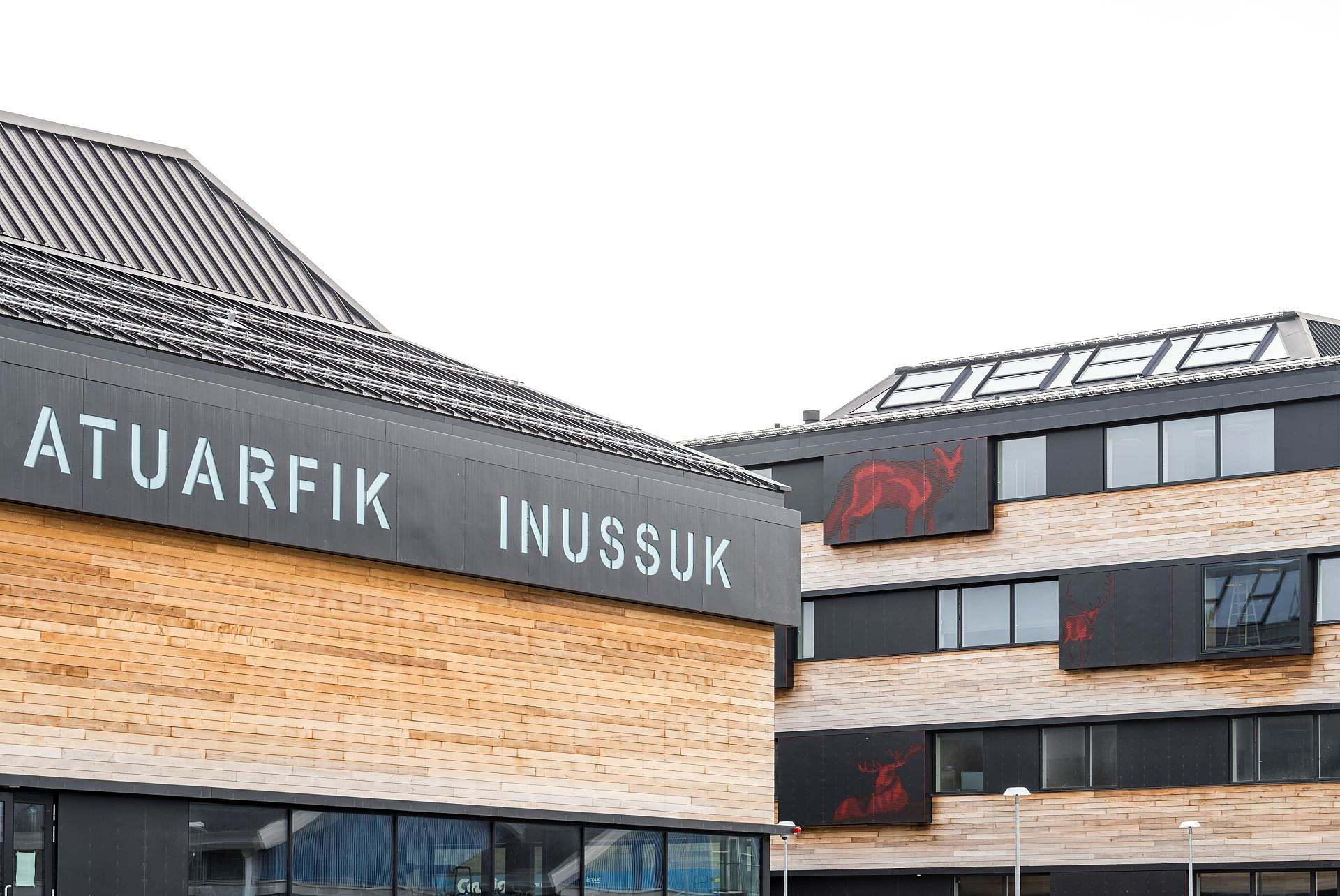
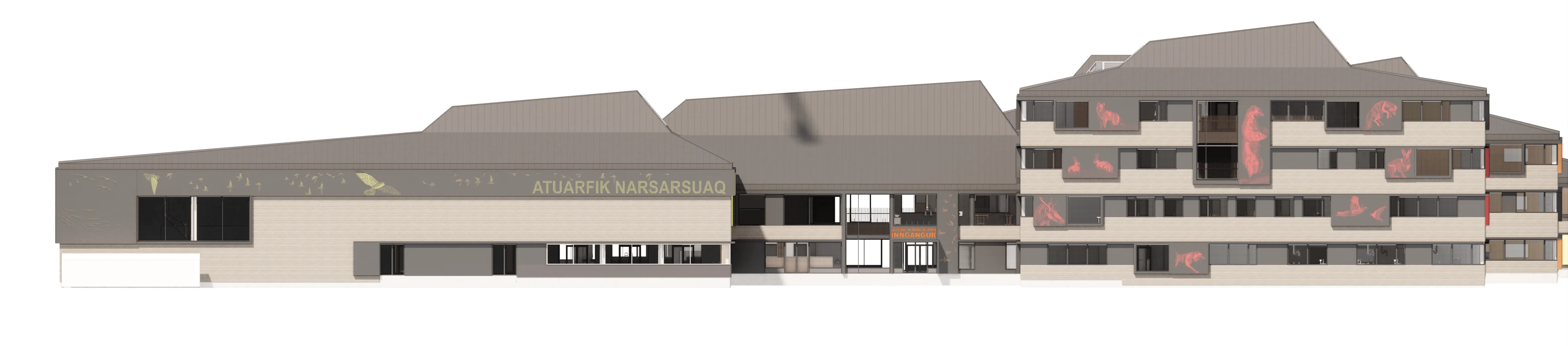
The facade of the seven building bodies appears as a unified whole, where different animals from Greenland meet the students in everyday life. The perforated panels are made of aluminium sheets, with carefully selected colours showing through the perforated exterior. The colours give each building its own unique identity, which also refers back to the Greenlandic cultural heritage, as the colour palette is taken from the city of Nuuk. It has been an ambition for the project that the animals can be used as an active part of teaching, especially in small classes, because the animals are visualised in their actual movements.
Greenland has a rich and magnificent wildlife that is an important part of the Greenlandic identity. Therefore, it is only natural that animals found in Greenland should adorn the facade. This can help residents of the town and users of the institution to form stronger attachments. The animals range from land animals, aquatic animals and birds. In general, all the animals are depicted as you would see them in nature, for example, hunting or playing. Some animals are made in 1:1 scale, while other animals arethree cases are zoomed in or out on one or more animals. Overall, an important dimension has been that the facade should create life - therefore the animals are seen in a movement. A lot of work has been done to create perspective and history in the panels.
Coherence between outside and inside
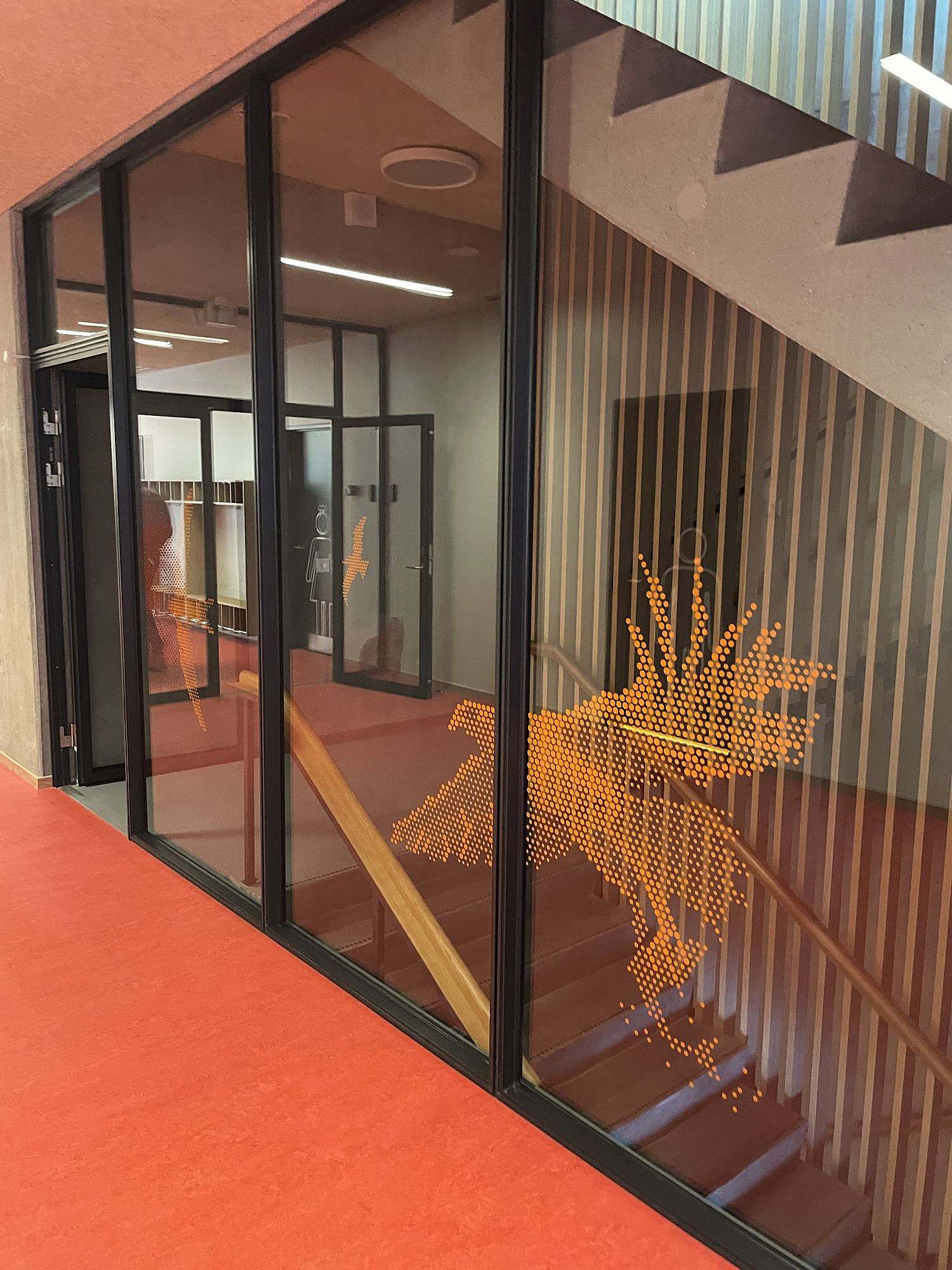
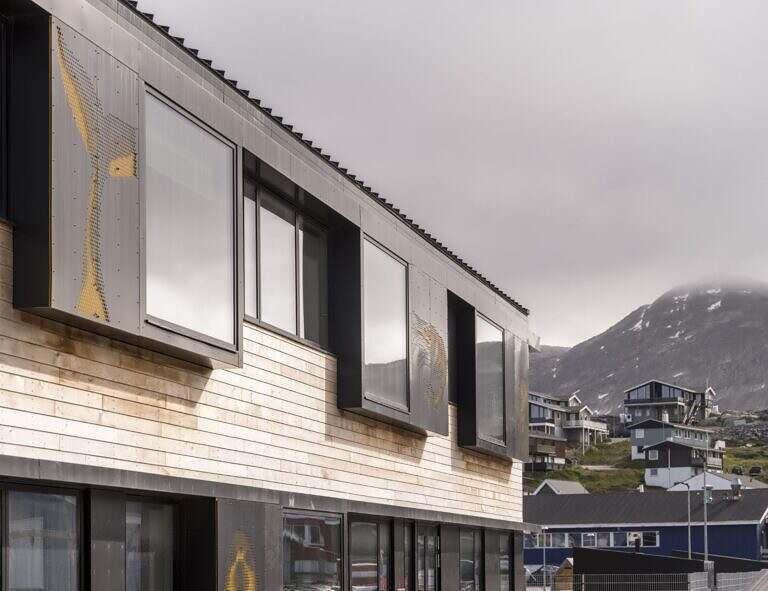
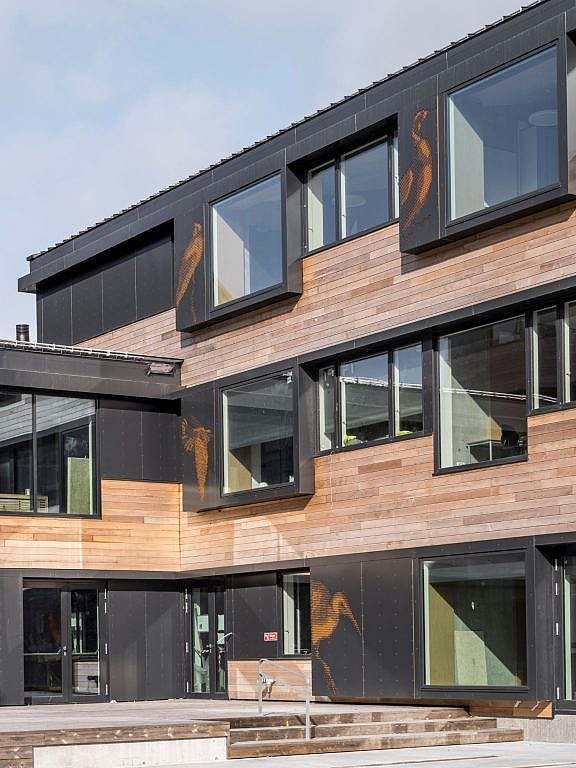
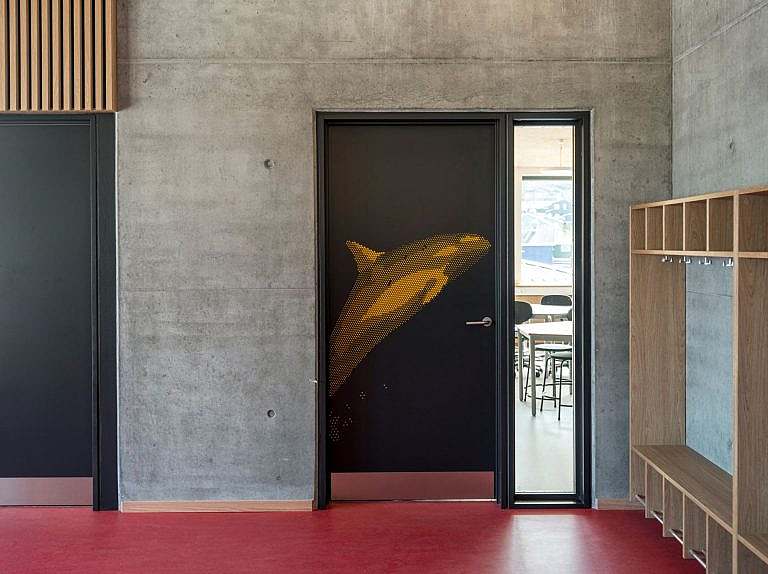
The cladding is horizontal natural wood that will naturally patinate over time and blend into the landscape. The bay windows are positioned so that each classroom becomes part of the facade. In this way, each class also gets its own animal, creating a sense of belonging and a playful wayfinding element that is repeated inside the building.
Through the bay windows, the inner life is made visible and at the same time the divide between inside and outside is reduced, as through the glass in the bay window you can not only follow the inner life of the school, but the students can also follow life outside the school.
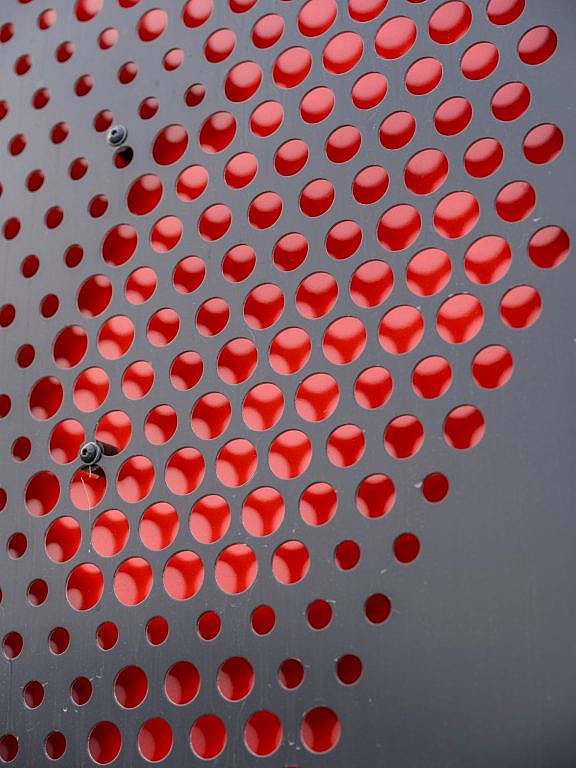
”The facade colours have changed during the process. We put a lot of effort into choosing shades that harmonise with Nuuk's colour palette and the traditional approach to coloured buildings. When experienced through the perforated aluminium sheets, the colours change character throughout the day, the year and with the weather - making the facade appear vibrant and in constant motion.”
Building for the Arctic climate
When building for the Arctic climate, you have to accept that nature sets the agenda. The strong winds and large amounts of precipitation in the form of meltwater and snow must be taken into account in construction and material selection. In addition, the project must also consider light levels, as there is typically too much light in summer and too little in winter. It is therefore necessary to consider solutions that allow for solar shading in summer while utilising the sparse natural light in winter, when the sun is so low that windows at eye level can be a challenge.
Greenland also has a unique building tradition that combines climate and culture. For example, it is an old building custom that colours adorn the buildings because the surrounding landscape is white, grey and black for 8 months of the year. For Greenlanders, the use of colour is synonymous with people and security, and we have naturally continued this tradition at Nuuk School.
A humpback whale in 1:1 scale
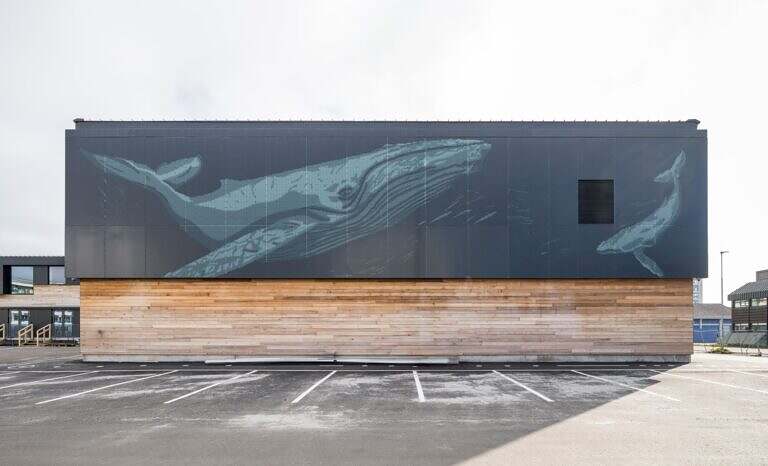
The largest continuous panel of 51x2 metres is at the entrance, where the school's name adorns the facade. On the north-facing facade of Building 1, facing one of the main streets of Nuuk town, a 1:1 humpback whale swims. The whale is depicted in natural movement along with a smaller whale and a school of smaller fish that swim around the corner and turn into birds. The panel measures 15x5 metres. The facade of the daycare centre is decorated with Greenlandic flowers that play nicely with an Arctic wetland in front of the centre.
One long learning process
Working with the facade has been an iterative process where we have tried, tested and changed. For example, the size of the perforated holes has been tested so that the animals can be recognised from both short and long distances. The smallest holes risk being filled with snow and it's important that the animal can still be recognised without the smallest holes. Therefore, we ended up with four diameters - 3cm, 2cm, 1.5cm and 1cm - which have proven to be the measurements that work for all parameters.